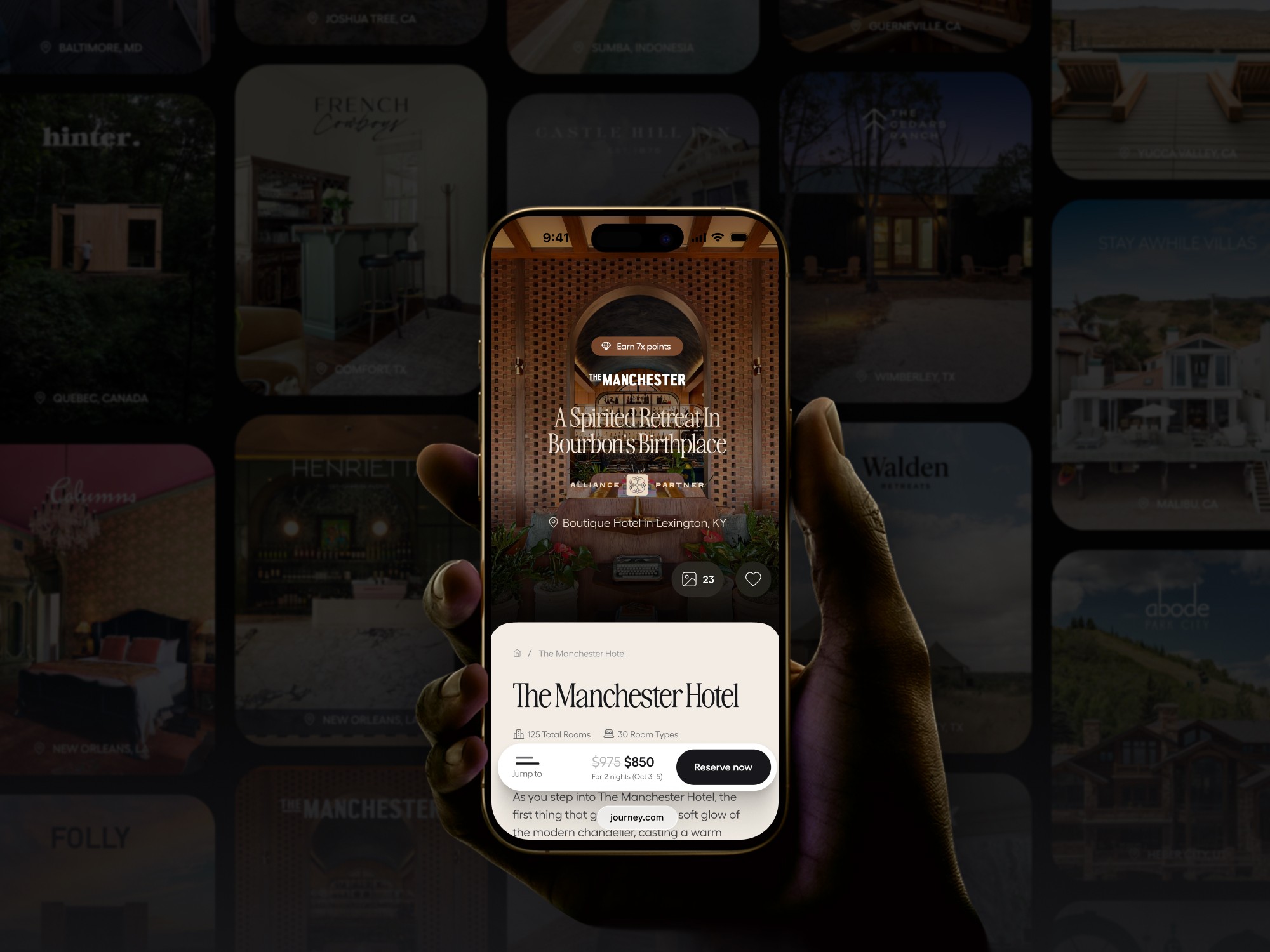
JOURNEY PDP REDESIGN
Overview
I led the redesign of Journey's Property Detail Page (PDP) — the core booking surface for a platform built on the premise that independent boutique hotels aren't interchangeable. Working from a blank Figma file, I designed a modular system spanning three distinct property types — authenticated vs unauthenticated users exploring hotels, resorts, or short-term rentals. That same component system later powered "hub & spoke" SEO pages across events, geo, and series pages platform-wide, expanding design solutions' utility without a rebuild each time.

The Challenge
The existing PDPs were described as feeling like another OTA (Online Travel Agency). The pages prioritized brand information over reservation-critical content, lacked content hierarchy, and failed to differentiate Journey from generic travel booking platforms like Booking.com or Expedia. The challenge was to blend a conversion focus (allow users to book fast), simplify a complex booking experience (multi-room, STR vs Hotel reservation needs) with an editorial vision (make the PDP feel as a magazine feature, not a transaction engine).

The Solution
Our editorial North Star meant every PDP told that property's story — like a Travel & Leisure feature — instead of listing room types and rates the way OTAs do, without ever burying the booking mechanics (rooms, pricing, Reserve Now) beneath it. Even if the trade-off was accepting slightly lower short-term conversion for a brand people remember and return to. Immersive photography and real storytelling replaced a spreadsheet-style layout, built mobile-first to force real content decisions, with web and app deliberately built to behave differently knowing that web is for exploration, SEO and agentic search; app optimized for fast booking. Pricing was the hardest test of that thesis. With up to 48 room types on some properties, and even more optionality with multi-room bookings, we designed a pricing experience that showed one price straight from the booking engine API ensuring accuracy throughout the user's flow. Since Journey has always been a member-only platform, I framed booking around exclusive member rates and let AI handle room-matching instead of a manual pairing interface — turning price into part of the story, not just checkout math.

The Result
Three full property-type instances — authenticated hotel, unauthenticated resort, short-term rental — went from a blank file to 98% complete in a two-week sprint, then shipped as a fully launched product, including transparent tax breakdowns and evolved in co-branded partner experiences. The redesign also surfaced a data-model gap upstream — only 54% of reservations had a matching guest record — reframing how personalization needed to work platform-wide. NOTE: I left before post-launch performance data was shared. This reflects what shipped, not projected impact.


